The first-party data opportunity
What is first-party data?
First-party data is information a brand collects directly from its own audience through its owned touchpoints and interactions. (StackAdapt)
In FMCG, that can include:
- Email or SMS opt-ins
- Survey and feedback responses
- Product preferences (flavours, formats, occasions)
- Engagement behaviour (what content was viewed, what was clicked)
It is valuable because it comes from the actual customer, making it a more trustworthy and reliable source of truth.
Why first-party data matters more than ever
For years, many marketing teams leaned on third-party tracking to find and re-target buyers at scale. That model has become less dependable as platforms and regulators tighten privacy rules and tracking signals become harder to access.
Google has changed direction on fully removing third-party cookies in Chrome, but the broader trend remains: marketers are planning around signal loss and building strategies that rely less on third-party identifiers. (Reuters)
This is why first-party data keeps rising as a strategic priority. The IAB’s State of Data 2024 reports that 71% of brands, agencies, and publishers plan to increase first-party datasets, with brands at 67%.
The real challenge: capturing first-party data from retail shoppers
If you sell through retail, you have a structural problem:
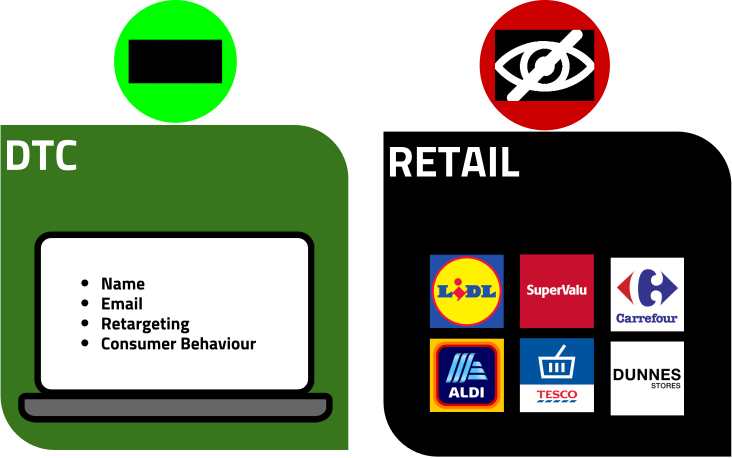
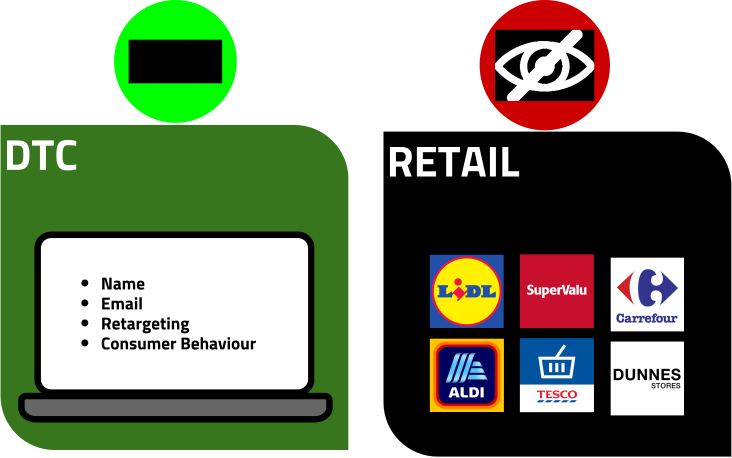
Unlike DTC, your product is bought in a store you do not control, by shoppers you often cannot identify, and the relationship usually ends at checkout.
That leaves FMCG brands with a familiar gap:
- You can see sell-in and sometimes sell-out
- You can run above-the-line campaigns
- But you struggle to consistently answer: who bought, why they bought, what happens next and how to get them to buy again
This is where the first-party data opportunity becomes real, because the simplest way to reach retail buyers is the one asset that already reaches every consumer: the packaging.
The post-purchase data unlock: turning packaging into your owned media channel
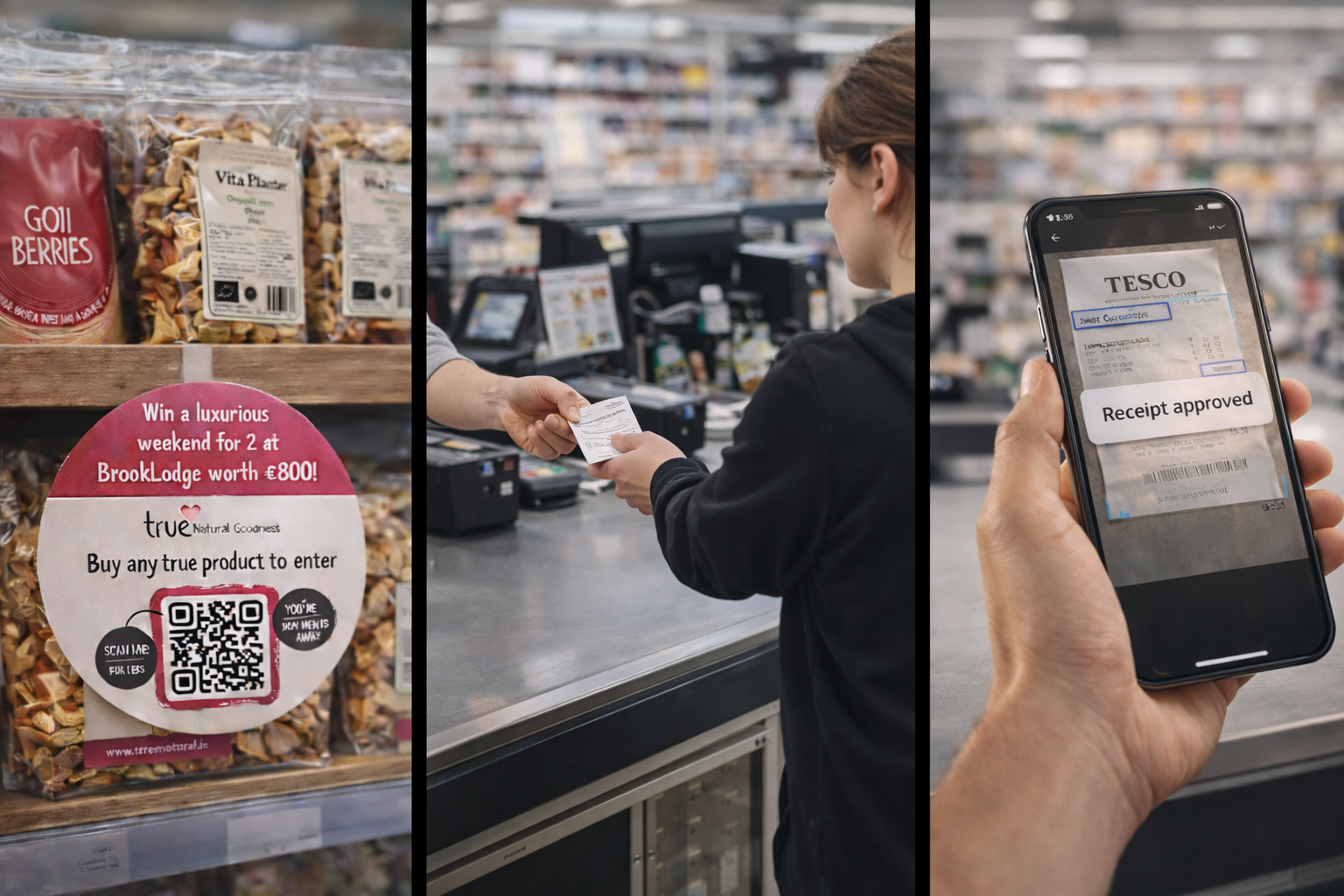
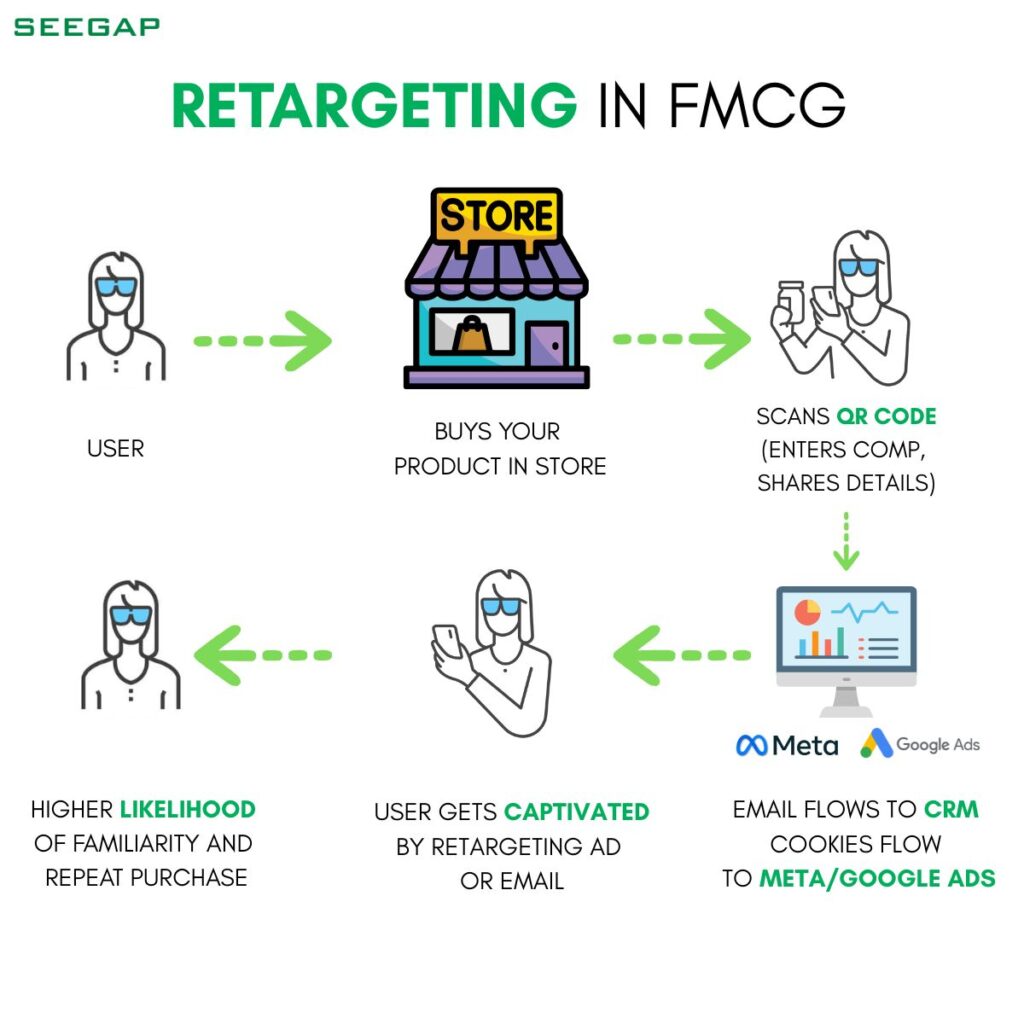
QR code experiences capture first-party data by turning a product and its packaging into a direct media channel a brand controls.
This means brands can collect first-party data directly from retail consumers creating a direct, permission-based relationship they own and can use across marketing, brand or product decisions. As first-party data is owned by you and not sourced through third-parties, it also leaves competitors in the dark about why you choose to do certain marketing activities or tactics.
All of this can be achieved by simply adding a QR code to packaging, with a compelling incentive and post-scan experience
What kind of data can FMCG brands capture?
There are two practical layers:
1) Interaction data (behavioural signals)
This is the data created by the scan itself, such as when and where scans happen, and what devices are used. It also included the behaviour on the site after the scan occurs.
2) First-party data (consumer-provided data)
This is the data the shopper gives you through the experience:
- Email or SMS opt-in
- Feedback and survey responses
- Preferences and product intent (repurchase, favourite flavour, next purchase)
- Purchasing behaviour from receipts
What can you do with it?
There are many benefits of first-party data for consumer brands.
- Improved product and business decisions
- More effective remarketing (email, SMS, retargeting ads)
- Better personlisation (name, purchasing behaviour)
- Improved customer experiences
- Lower customer acquisition costs
For most brands, it comes down to owning the relationship. The email address is the starting point. Email remains the lowest-cost way to re-engage customers, drive repeat purchase, and increase lifetime value. Every marketer wants more of them in our experience.
According to CMS Newswire, brands using first-party data for marketing have achieved a 2.9X revenue lift and a 1.5X increase in cost savings. Considering a top challenge of any marketing team is delivering a greater ROI, this opportunity has real impact.
How SeeGap helps FMCG brands capture first-party retail data at scale
SeeGap makes packaging a direct channel for capturing first-party data by building mobile-first, QR-led experiences designed around a clear objective: CRM growth, continuous insight, education, trial, or repeat purchase.
And because everything is trackable in real time, teams can see what is working, what is changing, and where the opportunities are while the product is still in-market.
If that sounds interesting to you, we’d love to chat about how you can launch a scalable first-party channel throughout retail stores, and start building connections with the people that matter most, your end consumer.